
Rural health spending gap blows out to $9.23 billion
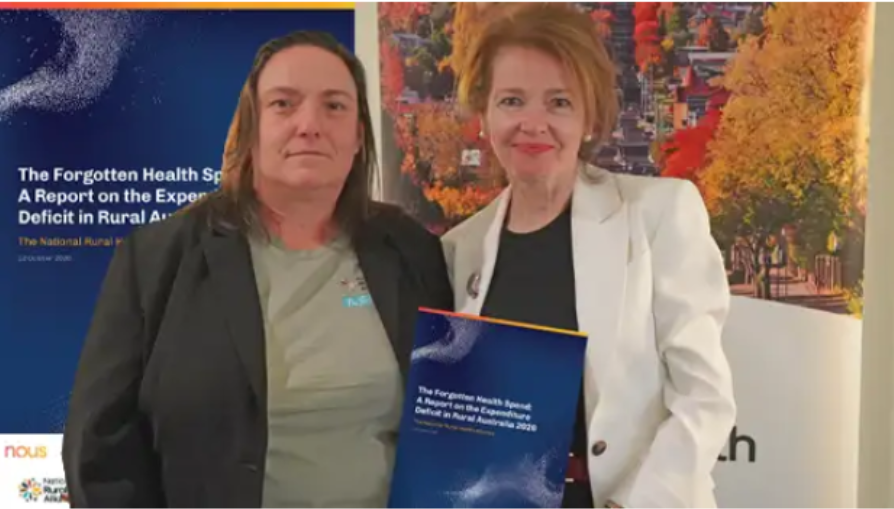
The latest report from the National Rural Health Alliance shows that the health expenditure gap between rural and urban Australians has widened by a further $880 million, from $6.55 billion in 2023, to $8.35 billion in 2025, and now $9.23 billion in 2026.
The latest findings in the Forgotten Health Spend: A Report on the Expenditure Deficit in Rural Australia 2026 call for urgent action from the Federal and State governments to ensure health equity for the more than 7.4 million Australians living in rural, regional and remote Australia.
According to the report, each rural Australian is receiving, on average, $1,218 less in healthcare funding each year than city residents. This is up $138 from last year. Those living in small rural towns of 5,000 people or less, bear the greatest brunt of the systemic shortfall, receiving on average $6,368 less healthcare funding per person, per year.
“We pay the same taxes and the same Medicare levy as people in the city. We just don’t get the same funding and access. When my husband Scott had a heart attack in Mildura, a town without a Cath lab, a medical evacuation was the only answer… but it was too late. This Australian system is just not equitable; we should not have to beg! The sad thing is, is that if he had a heart attack in the city, he would have lived,, and would have been there for our two beautiful children and me,” Katrina Umback, Mildura VIC.
“This is a health equity crisis. It’s appalling that the spending gap is widening each year, leaving millions of Australians further behind. Rural people are being let down by a universal health system that should support them when they need it most,” said NRHA Chief Executive Susi Tegen.
“Rural Australians keep the country’s economy running. They grow our food, power our industries and sustain communities. Yet, they have poorer health and die younger than city people1. Despite governments knowing this, and solutions being provided, these communities do not receive the funding allocation and policy options they need to get care.”
“The figures demonstrate the consistent underprioritisation and underfunding of rural Australians and clinicians that support them, despite their vital contribution to the Australian economy across various sectors,” said Susi Tegen.
“This is no longer a health issue, but an economic and social issue. 70% of Australia’s export income comes from rural communities, and 90% of the food we eat, and 50% of the tourism income, even though rural Australia only makes up 30% of the population”.
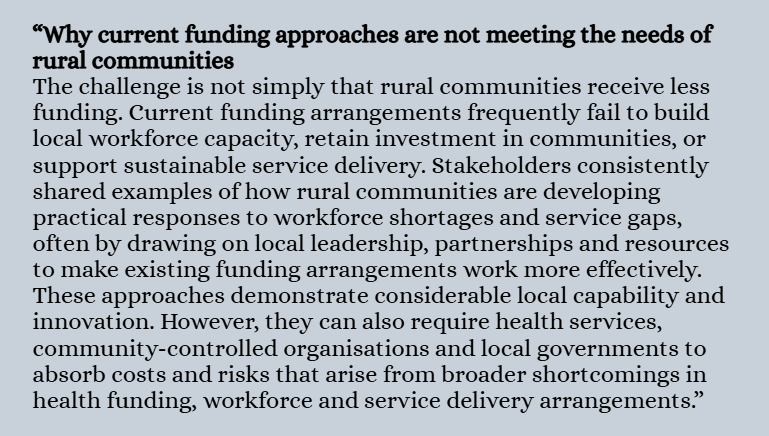
Communities are being left to pick up the slack where state and federal funding for rural health services and infrastructure falls short. Communities that wish to expand services to surrounding areas must raise their own funds to expand and to maintain, essential services.
This project will divert significant sewer loads from the Batemans Bay catchment and restore critical operational headroom to Batemans Bay STP, safely absorbing future growth trends and futureproofing both facilities for the long term. The Tomakin STP Upgrade is required to support growth, maintain environmental compliance and meet the longterm wastewater management needs across the northern region of Eurobodalla.
Without this investment, Council faces increasing risk of environmental non-compliance, constraints on housing growth, increasing operational costs and reduced resilience during peak tourism and wet weather events.
The upgrade will unlock regional growth, protect waterways and beaches, improve service reliability and provide capacity for future generations.”
It was CARRIED that
1. That Council notes that augmentation of the northern region sewerage system is required to address existing capacity constraints, accommodate future population growth and maintain regulatory compliance.
2. That Council notes the Tomakin Sewage Treatment Plant augmentation is the key enabling project within Council’s adopted regional wastewater strategy, supporting future load diversion from Batemans Bay and optimisation of both treatment plants.
3. That Council acknowledges the necessity of this project.
4. That Council approves progression of the Tomakin Sewerage Treatment Plant Augmentation Project to the next phase, including completion of detailed design, preparation of tender documentation and obtaining the necessary statutory approvals.
5. That Council receives a further report following completion of the detailed design and tender process, including updated project costs and a recommendation regarding construction contract procurement.
(Councillor Schutz/Councillor Winslade)