NSW Councils launch action plan to fix regional health crisis
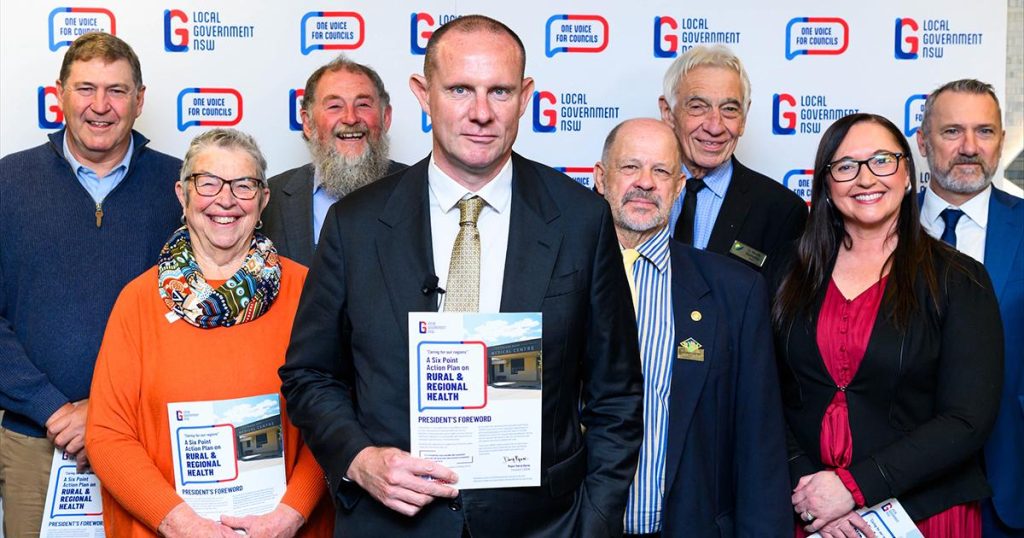
The peak body for councils across New South Wales has today launched a detailed action plan to address the growing healthcare crisis in rural, regional and remote communities.
The launch of the plan, held in conjunction with the annual LGNSW Rural and Regional Summit, marks the beginning of a campaign from councils across NSW to demand action on regional health in the lead up to the March State Election.
Mayor Darcy Byrne, President of LGNSW, said the “Caring for our Regions” action plan clearly lays out six key steps that would begin to address the growing inequity in access to healthcare services.
“Today councils from across NSW are sending a message that the crisis in regional health must not be ignored and that we demand action to fix it,” Mayor Byrne said.
“Our councils are working at the coalface in the bush, seeing how the gaps in health services are growing and becoming more dangerous by the day.
“Towns without GPs, mothers having to travel for hours to give birth, pensioners without access to aged care beds – these are all symptoms of the crisis and cannot be ignored.
”Shamefully, life expectancy for people living in these communities is about three years less than metropolitan areas[1].
“Multiple inquiries have repeatedly found that citizens in rural, regional and remote parts of NSW have poorer health outcomes and face significant challenges in accessing health and hospital services compared to people living in metropolitan areas.[2]
“Today we are speaking with one voice to say that the time for inquiries is over and that we demand action to fix the inequities in our health system.
“It is completely unacceptable that someone’s postcode will determine their access to essential healthcare services and we won’t stand for this crisis being allowed to fester and continue to grow.
“This Caring for our Regions action plan is informed by councils’ real experiences on the ground; listening to their communities, feeling the impact and in many cases stepping in to fill the void.
“For too long, councils have been bridging the gaps in access to appropriate healthcare for their communities and we invite the State and Federal governments to partner with us in implementing these six key actions.”
Strengthen the regional health workforce
The NSW Government must establish a Regional Health Workforce Investment Package, with $440 million over four years, to address systemic workforce shortages across general practice, specialist care, nursing, allied health and particularly mental health services in rural, regional and remote NSW.A GP guarantee
In a country as wealthy as ours, it is unacceptable that in parts of rural, regional and remote NSW accessing a GP is nearly impossible. A GP guarantee is needed, requiring targeted investment in regional training pathways and recruitment and retention incentives, and long-term workforce sustainability. LGNSW calls for a $200 million investment over four years to expand regional GP training, support recruitment in hard-to-fill locations, and ensure consistent access to primary care in under-serviced communities.Reimburse councils for filling the health gaps
The NSW Government must establish a rural, regional and remote health reimbursement scheme to compensate councils for costs incurred in supporting access to local healthcare. LGNSW calls for a $20 million program over four years to reimburse councils that are forced to redirect funding from core infrastructure and community services to support access to local healthcare.Safe, local maternity care
The NSW Government must reverse the decline in rural birthing services and restore safe, local maternity care. This requires targeted investment of $120 million over four years to protect and rebuild rural birthing units and expand midwife-led continuity of care and culturally safe maternity models, including for Aboriginal women and communities.Fund patient transport as core health infrastructure
The NSW Government must recognise patient transport as core health infrastructure. LGNSW calls for a $150 million investment over four years to provide sustainable funding for community transport services and integrated health and transport planning to improve access to care across rural, regional and remote NSW.Invest in community-based aged care and ageing in place
The NSW Government needs to work with the Commonwealth to establish a Rural and Regional Aged Care Transition Fund, with $250 million over four years, to:expand council-delivered supports for ageing in-place, including in-home care and community-based services in under-serviced regions;
support transitional care models that reduce hospital discharge blockages; and enable faster delivery of residential aged care infrastructure in high-need communities.
Regional health advocate from the Eurobodalla Dr Arn Sprogis said “Finally after decades of poor access to State and Commonwealth funded healthcare in rural areas like ours, rural councils have taken up the challenge for their communities with an Action Plan To Fix The Regional Health Crisis.”
“Eurobodalla Council has the capacity to take a leadership role in reforming the local health system to be community focussed, better integrated and most importantly equally accessible to the whole community. It’s now up to both State and Commonwealth governments to support local governments role in equity of access and funding for healthcare” said Dr Sprogis.
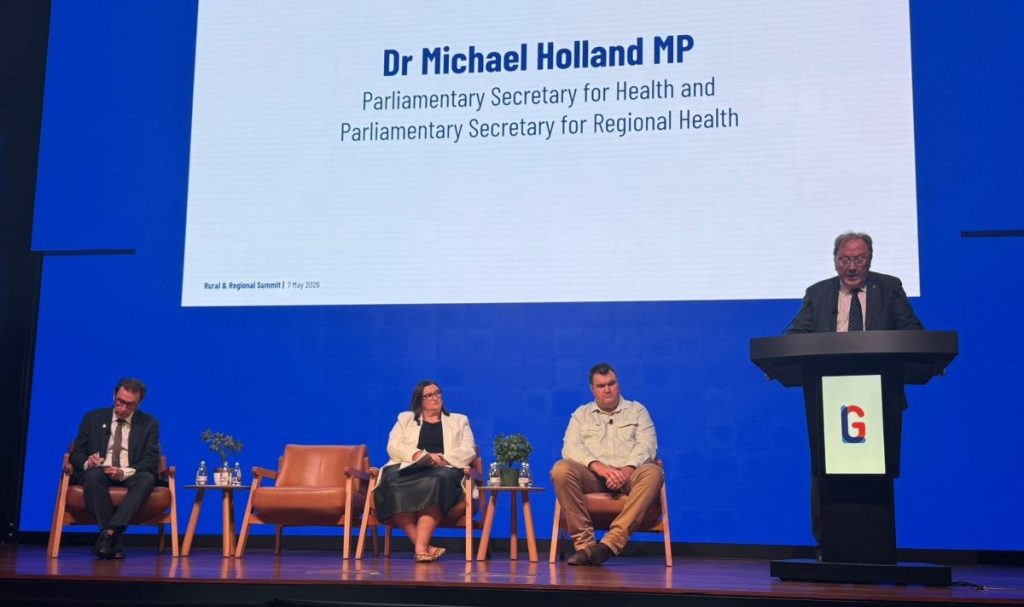
Dr Michael Holland, Member for Bega, presented to the Local Govt Rural and Regional Summit this morning.
“Rural and regional health is central to the future of NSW, and people living in regional, rural and remote communities deserve the same timely, high-quality healthcare as anyone else in the state.
“At the Rural and Regional Summit, I welcomed Local Government NSW’s Six-Point Action Plan and its strong alignment with the NSW Government’s rural and regional health priorities. I also acknowledged the important advocacy of local councils and regional communities in shaping practical solutions to ongoing healthcare challenges.
“I spoke about the significant progress being made to strengthen the regional health workforce, including more than 5,000 additional full-time equivalent health workers across regional and remote NSW since 2023, expanded recruitment and retention incentives, increased rural training pathways, and more than $200 million invested in health worker accommodation.
“I also highlighted the importance of improving access to primary care and GP services through initiatives such as the Rural Generalist pathway, multidisciplinary care models and the statewide rollout of Virtual Urgent Care, which is helping improve access to healthcare for people in regional and remote communities.
Councils are playing a critical role in supporting healthcare delivery through housing, childcare, transport and community support, and I acknowledged that strong partnerships between government, councils and local health services are essential to improving outcomes.
The presentation also addressed patient transport, regional maternity services and aged care, including recent investments in additional regional midwives, continuity of care models and initiatives to support people to age in place.
While important progress is being made, I made clear that the work is ongoing. The NSW Government remains committed to working closely with councils, health services and communities to strengthen healthcare access, support the regional workforce and deliver better long-term outcomes for rural and regional NSW.”