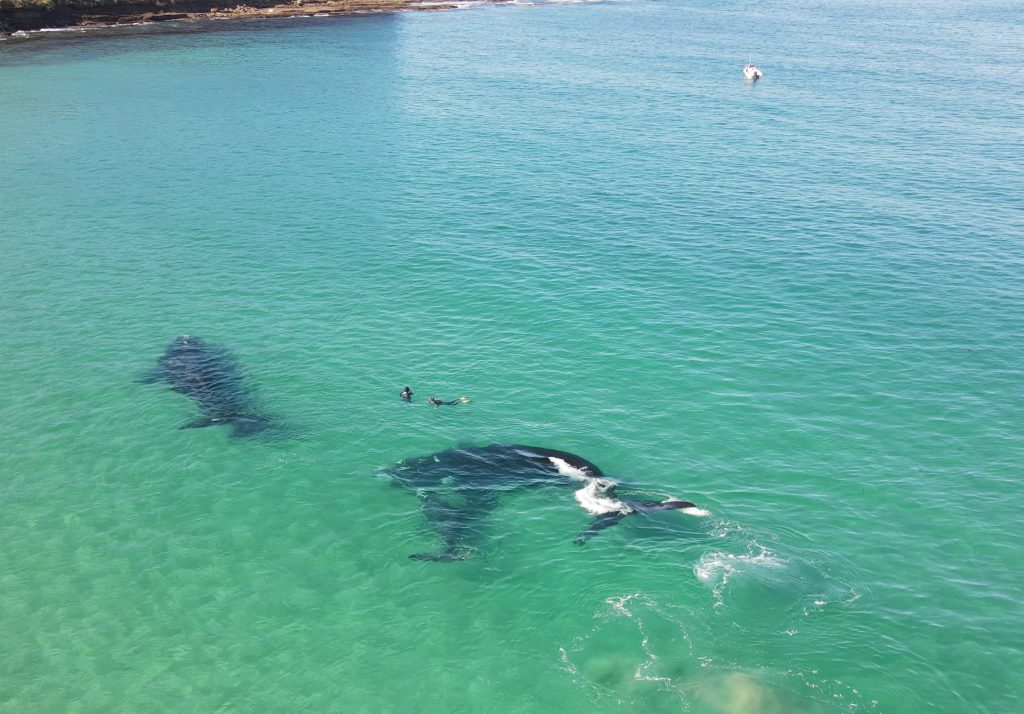
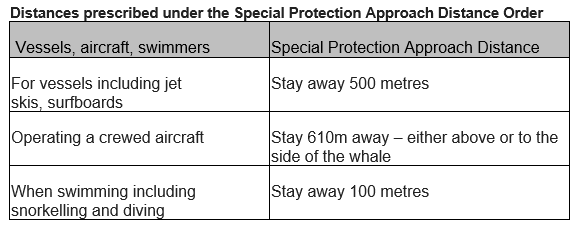
The NSW National Parks and Wildlife Service (NPWS) has issued a Special Order for all vessels to stay at least 500 metres, and swimmers 100m, away from all Southern Right Whales in NSW waters.
The Order will be in place until 30 November 2026 when the breeding and calving season ends in NSW.
Southern Right Whales attract a lot of attention as they stay close to beaches and move slowly on the surface. Although incredibly rare, they are easily spotted when they visit.
The Order comes after a mother and calf were recently spotted off Sydney, with curious boaters and locals venturing close to the pair.
The NPWS citizen science project ‘Right Whale ID’ has tracked individual whales through their unique white facial callosities for the past 6 years. Research has found that even a single swimmer approaching too enthusiastically can trigger a significant negative behavioural response in the whale.
Identifying one of the handful or so Southern Right Whales off the NSW Coast each whale season, as opposed to one of the 40,000 humpback whales, is fairly simple.
Any slow moving, 14-16 metre long whale which is 500m or less off an ocean beach could be a Southern Right Whale. Identifying features include:
- a distinctive V-shaped blow when they exhale
- large broad body size, absence of a dorsal fin
- white markings (skin growths) on their faces and heads known as ‘callosities’
- the tail/fluke is geometrically angular and usually black on both top and bottom sides.
Unlike Humpbacks, mother and calf Southern Right Whales spend more than 90 per cent of their time in waters shallower than 20m, and often less than 500m from shore. While nursing they move very slowly, engaging in a still, energy-saving behaviour called ‘logging’, which is floating at the surface for long periods.
These behaviours make them highly susceptible to disturbance from overly curious people swimming, paddling or boating too close for the mum’s comfort.
Disturbances can cost the animals precious energy budget as their responses often include significant increases in swim distances as they try to evade them. The disturbance effect is seen in tracking data over subsequent days.
NPWS asks people to comply with the keep-away distances to help protect these mammals.
Members of the public, partner organisations and NPWS staff will collect witness accounts when people venture too close to Southern Right Whales and proceed with investigations where warranted. Non-compliance could result in fines or court appearances.
NSW National Parks and Wildlife Service Marine Wildlife Project Officer Andy Marshall said “Doing the right thing by Southern Right Whales means the southeast Australian population has a better chance of recovering. I would like to think that future generations will be able to see these incredible animals and be awed by them, in the same way we are today.”