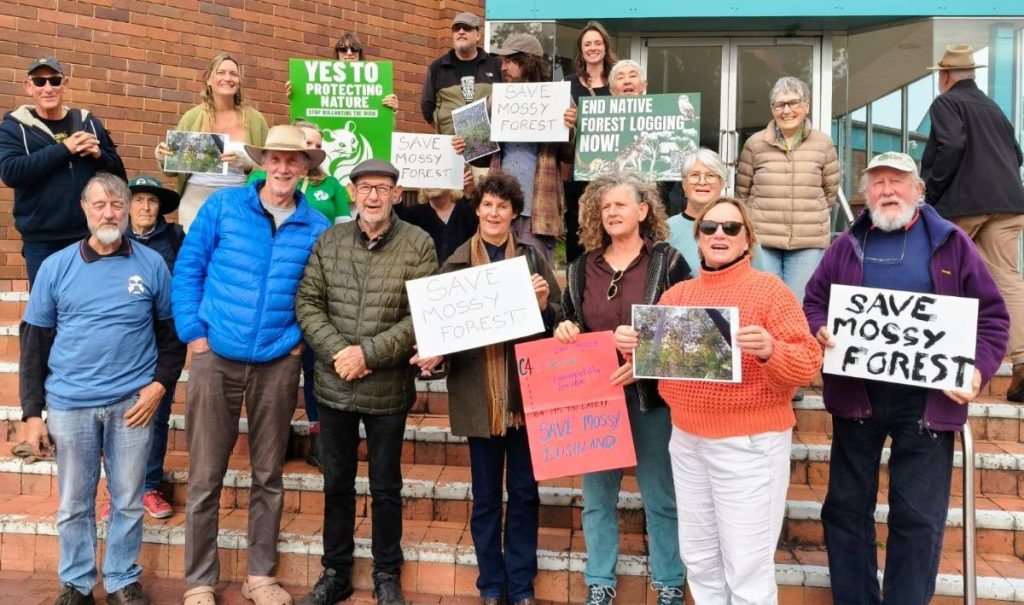
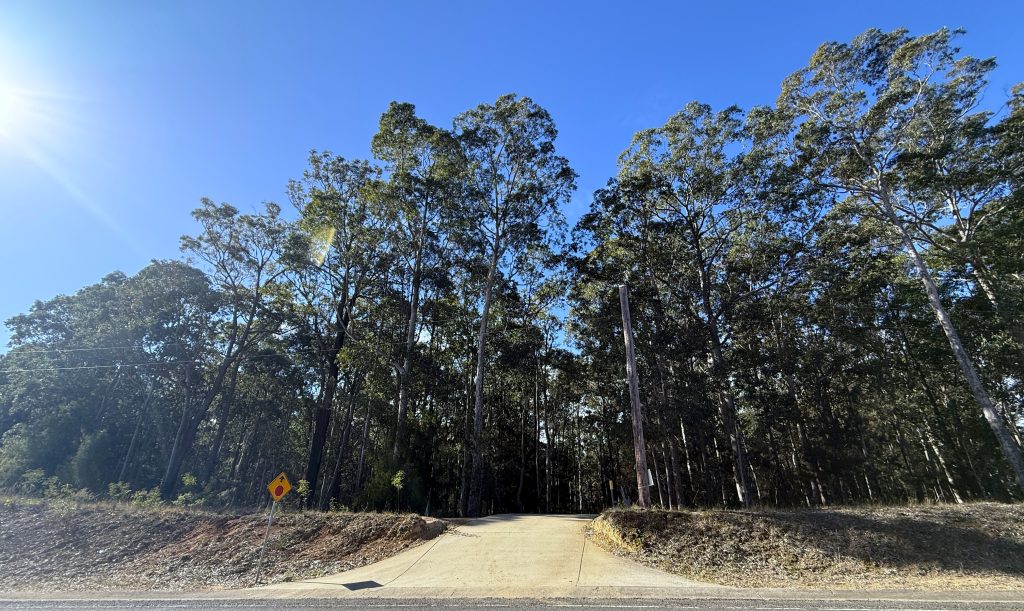
When questioned, Council’s Director of Planning and Environment, Gary Bruce , said that they had not assessed whether the remaining habitat could still support local wildlife so close to the new housing lots.
Councillor Anthony Mayne said the reduction from an initial 16 lots down to 14 was still far too high for a C4 zone. “Growth and environmental protections can go hand in hand; that’s why we have C4 zoning to ensure appropriate development” . Cr Mayne also warned that the move sets a dangerous precedent. He added that Council needs to be wary of supporting developers who play “mathematical games” to bypass development controls regarding minimum lot sizes and retained forests.
Councillor Colleen Turner suggested that building fewer houses would reduce the risk of trees being cleared in the first place. She questioned how Council could guarantee ongoing compliance, highlighting the steep challenges staff face in preventing the illegal destruction of irreplaceable trees, even with tools like a tree register.
Conversely, councillors supporting the DA pointed to the recommendations of Council staff. Councillor Phil Constable referred directly to the staff report, which maintained that necessary protections and mitigation measures were securely in place. Backing this up, Mr Bruce said the DA complies with minimum lot sizes and includes strict flora and fauna management plans alongside formal offset mechanisms.
Councillor Amber Schultz strongly defended the DA, stating that the rights of landowners to invest and develop their land should be protected. Council accepted her proposal to add further restrictions on cutting down hollow-bearing trees, which endangered fauna rely on for survival. Cr Shutz pointed out the developer’s use of “biodiversity offsets” in the DA which means they can clear locally by purchasing environmental credits elsewhere. However, she also acknowledged this still effectively destroys the immediate Mossy Point wildlife corridor.
When the matter was put to a vote, the chamber was split down the middle in a deadlocked 4–4 tie. Councillors Laurence Babington, Phil Constable, Amber Schultz, and Mayor Mathew Hatcher voted in favour of the DA. Councillors Anthony Mayne, Mick Johnson, Sharon Winslade, and Colleen Turner voted against. Mayor Hatcher and Councillor Babbington did not contribute to the debate.
Mayor Hatcher used his casting vote to break the tie and pass the motion.
After the vote Councillor Mick Johnson said “I think this will be one of the decisions we will live to regret for time immemorial. I think it’s a very sad day.”
Community attendees expressed surprise that Mayor Hatcher chose not to explain his views during the meeting, given the contentious and close nature of the vote. Local advocate Reverend Linda Chapman noted that in the case of a split vote, a Mayor normally votes to maintain the status quo.
Speaking on behalf of outraged residents, Rev. Chapman declared that the community group will continue to actively protest the decision.
“This isn’t just about losing a few trees; it’s the systematic dismantling of a critical environmental corridor,” Rev. Chapman said. “C4 zoning exists precisely to prevent high-density fragmentation like this. Sadly, Council has prioritized large development over extinction risks.”
Moruya Mail understands that Council has now received a motion to rescind the decision. It seems the story has not ended yet.